
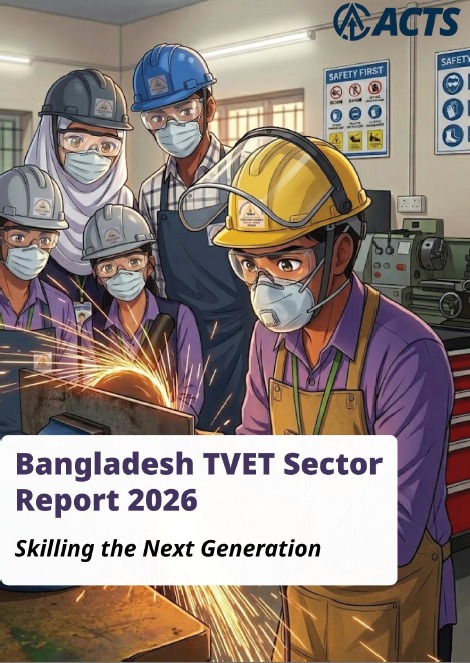
The newly released Bangladesh TVET Sector Report 2026 by ACTS Bangladesh outlines an operational blueprint to prepare the nation’s human capital for post-LDC graduation and the Fourth Industrial Revolution (4IR). As the era of relying on low-cost labor closes, upgrading the workforce to advanced, climate-resilient, and specialized technical sectors is critical for economic survival and attracting Foreign Direct Investment (FDI).
Key highlights from the 2026 strategy:
-
The 2025-2030 mandate aims to achieve a 30% TVET enrollment rate to actively absorb the 18.9% youth NEET (Not in Education, Employment, or Training) population into the formal economy.
-
Scaling learning models that split student time symmetrically between foundational institutional theory and practical application on a private sector factory floor.
-
The fully integrated Bangladesh National Qualifications Framework (BNQF) now allows technical graduates to transfer credits directly into university BSc programs, dismantling the stigma around vocational education.
-
Driving Mutual Recognition Agreements (MRAs) to ensure Bangladeshi expatriates are recognized and compensated as certified skilled technicians globally, rather than unskilled labor.
-
Equipping polytechnic labs for IoT and advanced robotics while embedding climate-resilient practices across standard training modules.
-
Mandating industry immersion programs and continuous professional development to equip technical instructors with modern pedagogical and industrial knowledge.
By strictly aligning curricula with real-time industrial demands and enforcing enterprise apprenticeship quotas, Bangladesh is laying the foundation to transform its youth demographic dividend into a high-income, globally recognized workforce.
Click here to Download
#TVET #Bangladesh2026 #SkillsDevelopment #FutureOfWork #LDCGraduation #Industry40 #YouthEmpowerment
